

Wheel Alignment & Balancing
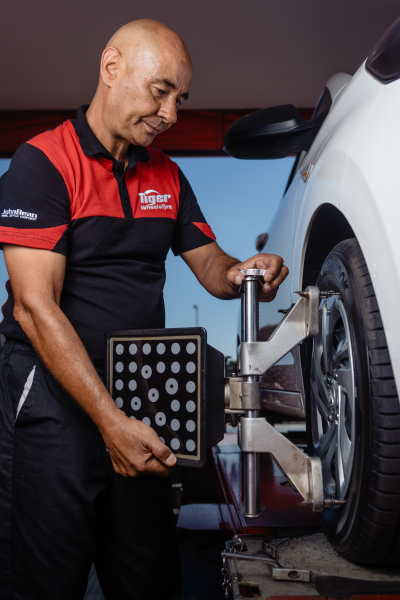
Wheel Alignment
Correct wheel alignment helps your tyres wear evenly, improves vehicle handling and can extend the life of your tyres. It should be checked regularly—not only when you notice your vehicle pulling, shuddering or shaking.
Wheel alignment refers to the position and angle of your wheels in relation to the road and to one another. When a wheel is incorrectly aligned, the other wheels may have to work harder to compensate. This can lead to:
- A directional pull on the steering wheel, forcing you to counter-steer
- Uneven tyre wear
- Reduced vehicle stability and handling
- Potential mechanical problems over time
What can you do about it?
Visit one of our branches for professional 3D wheel alignment. A qualified alignment technician will assess your vehicle and adjust the wheels to ensure they are correctly aligned with the road and with one another.
The technician will check and adjust three primary wheel alignment angles:
- Camber angle: The inward or outward tilt of the wheel when viewed from the front of the vehicle.
- Toe angle: The direction in which the leading edges of a pair of wheels point towards each other, known as “toe-in”, or away from each other, known as “toe-out”.
- Caster angle: The angle of the steering axis when viewed from the side of the vehicle. This angle influences steering stability and how the steering wheel returns to its central position after completing a turn.
Wheel Balancing
Wheel balancing is different from wheel alignment. While wheel alignment adjusts the position and angles of the wheels, wheel balancing ensures that the weight of each wheel and tyre assembly is distributed evenly.
As tyres wear over time, they may not wear down evenly. Even small differences in weight distribution can cause:
- Changes in the distribution of rubber across the tyre
- An imbalance in the wheel and tyre assembly
- Vibrations or shaking through the steering wheel
- Uneven or accelerated tyre wear
Despite advances in tyre compounds and manufacturing processes, even new tyres may occasionally require balancing.
What can you do about it?
Proper wheel balancing can improve driving comfort, reduce vibrations and help you get the best possible performance from your tyres.
During the wheel-balancing process, one of our qualified technicians will:
- Mount each tyre to its rim and inflate it to the correct pressure
- Fit a new valve stem where required
- Use specialised equipment to identify the location and severity of the imbalance
- Attach balancing weights to the rim to correct the imbalance
- Spin the wheel again to confirm that it is correctly balanced
How Often Should These Services Be Done?
Wheel balancing, 3D wheel alignment and tyre rotation should generally be checked every 10,000 km or at least once a year. They should also be inspected if you notice uneven tyre wear, steering vibrations, pulling to one side or changes in your vehicle’s handling.
Visit your nearest Tiger Wheel & Tyre Namibia branch to have your tyres and wheels professionally assessed.
Store Locator | Contact
Locate your nearest store here or enquire online now.